









Calf Strength Exercises for Better Stability
December 9, 2025
Ever heard your calves called “the second heart”? There’s a reason for that. These small but mighty lower leg muscles do more than just help you look good in shorts. Strong calf muscles improve overall athletic performance, making them essential for anyone looking to enhance their physical abilities.
They pump blood back to your heart, keep your ankles stable, and power every step, jump, and lift you make. Whether you’re an athlete, runner, or weekend gym-goer, stronger calves mean better balance, endurance, and injury prevention.
The gastrocnemius and soleus muscles work collectively to facilitate plantar flexion, which is the movement of pointing the toes.
Think about it: how often do you push off your toes, stand on one foot, or lift your heel during a workout? Every time you walk, run, or squat, your calves are quietly working overtime. Yet, most people skip them until shin splints, plantar fasciitis, or calf strains show up. Calf muscles absorb significant internal forces when running, absorbing up to 8 times the body weight with each step.
If you’ve ever wondered how to build strength, improve balance, or add more intensity to your training, you’re in the right place.
This guide will explain everything you need to know to safely and effectively strengthen your calves, with no extra weight required (unless you want to grab a dumbbell). Performing calf exercises two to three times a week is recommended for optimal strength gains.
Here’s what we’ll cover:
Ready to train smarter, not just harder? Let’s flex those “second hearts” and get moving!
When it comes to lower leg training, most people focus on quads, hamstrings, or glutes and forget about the hardworking calf muscles that keep every step strong and stable.
Your calves, made up of the gastrocnemius and soleus muscles, power your runs, jumps, and lifts. They’re also essential for balance, endurance, and injury prevention. The gastrocnemius muscle is a powerful muscle that gives the calf its rounded shape and runs from the back of the knee to the heel.
Ready to give your “second heart” the love it deserves? These 12 calf-strengthening exercises mix bodyweight, machines, and functional training to help you build powerful, sculpted legs that perform as great as they look. Calf raises are one of the most popular and effective exercises for strengthening your calves.
If you want to isolate your soleus muscle, this one’s your go-to. Because your knees are bent, the larger gastrocnemius muscle takes a back seat, letting the deeper muscles do the heavy lifting. The knee angle impacts how the calf muscles contract, influencing the activation of the gastrocnemius and soleus during exercise.
Example: Imagine sitting at your desk, but instead of fidgeting, you’re working your “hidden” muscles, the same ones that help you stay balanced during squats and sprints.
Trainer Tip: Add a dumbbell or weight plate across your thighs for extra resistance.
This classic strength training move targets your gastrocnemius, the muscle that gives your calves their shape. Doing it with weights increases intensity and helps you build strength fast.
Example: Think of pushing off during a sprint, your calves fire up in the same way. This movement trains that explosive push.
Read our article: What’s the Best Dumbbell HIIT Workout
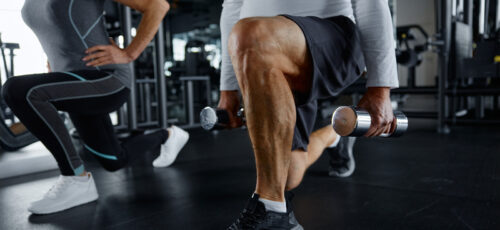
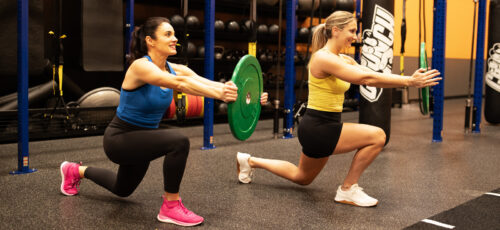
Split squats train your entire leg, but they place extra tension on your calves to stabilize your ankles and keep your balance.
Example: Picture lunging to grab your gym bag; this movement mimics the dynamic strength and stability needed.
Trainer Tip: Keep your core tight and knees aligned to prevent joint strain.
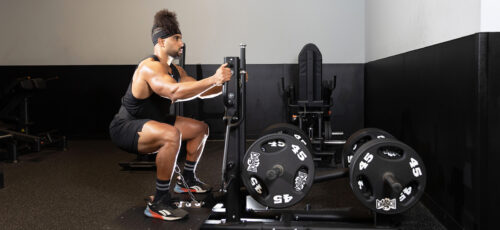
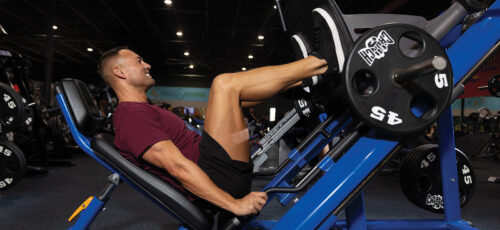
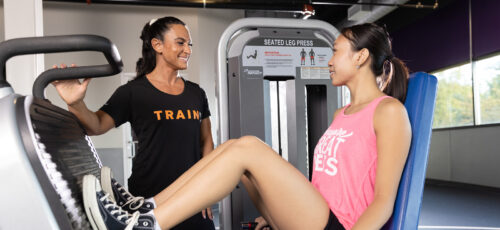
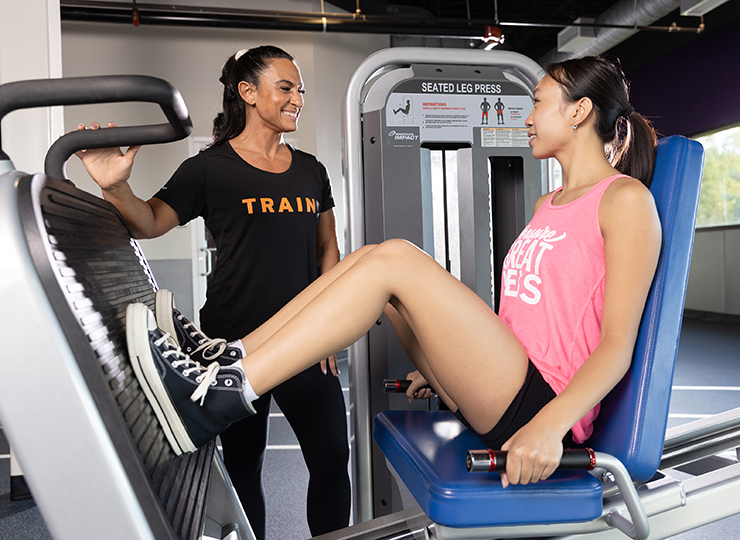
This machine-based version removes balance from the equation, allowing you to focus solely on calf strength. It’s a great option if you’re new to weighted training or recovering from an injury.
Example: Imagine pressing a heavy door open with your toes; this trains the same muscle coordination.
Caution: Skip this one if you have knee pain or tenderness.
Read our article: Free Weights vs. Machines
No equipment? No problem. This simple move builds calf endurance and can be done anywhere, on stairs, a step, or even flat ground.
Variation: For an extra challenge, perform single-leg raises to improve stability and isolate weaker calves.
Example: Waiting for your coffee? Do a quick set, and your lower legs will thank you.

This variation adds an angle to the movement, activating both the gastrocnemius and soleus for deeper engagement.
Example: Imagine reaching for something on a high shelf, your supporting leg does a micro version of this every time.
Trainer Tip: The lower your grip, the tougher the angle, so adjust for your strength level.
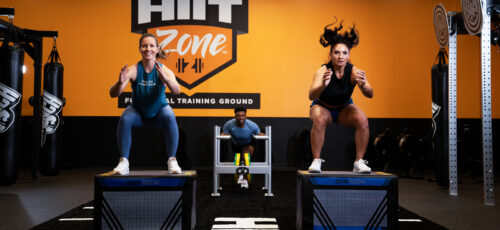
This plyometric move develops explosive strength and power, great for athletes or anyone wanting to boost speed and agility.
Variation: Jump consecutively for endurance, or pause between reps for control.
Example: Think of a basketball player driving off the court; those quick bursts come from powerful calf contractions.
The wall sit already burns your quads, but adding calf raises takes it to another level. It trains endurance, core strength, and lower-leg stability. Maintaining a slow and controlled tempo during calf exercises forces the calf muscles to work independently of the Achilles tendon for better results.
Example: Picture yourself sitting in an invisible chair, only now your calves are doing the work.
Trainer Tip: Keep your back pressed firmly into the wall to avoid strain.
This agility move strengthens your calf muscles while improving speed, balance, and coordination.
Example: Think of dancing through cones during soccer practice; it’s the same rhythm, but your calves are taking the lead.
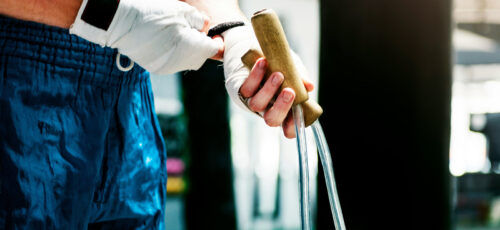
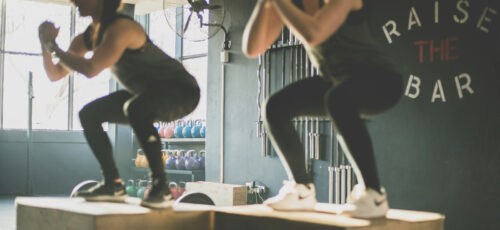
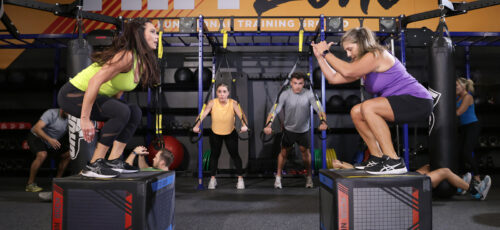
A tried-and-true favorite, jumping rope strengthens your gastrocnemius, improves endurance, and torches calories, all at once. Box jumps are an explosive movement that helps build explosive lower-body power and engage the calves effectively.
Example: Channel your inner boxer. This move keeps your lower legs, ankles, and cardio system in top shape.
Read our article: Is Jumping Rope the Best Kept Secret in HIIT Exercise?
Sprinting is the ultimate functional calf workout. Whether you’re on a treadmill, track, or hill, your calf muscles drive your power and speed. Incline exercises, like running uphill, significantly challenge calf muscles compared to flat surface workouts.
Example: Sprinting uphill mimics a natural calf raise; each step forces your gastrocnemius to fire for propulsion.
Whether you prefer the stationary bike or the open road, cycling builds calf endurance while being gentle on the joints. It’s perfect for cross-training days.
Example: Picture cycling up a gentle hill, each rotation works your calves through controlled tension and endurance training.
Read our article: What Exercises Should I Do to Lose Leg Fat?
Even simple calf-strengthening exercises can go wrong if your form or approach isn’t right. Studies show that poor technique and overtraining are leading causes of calf strains and Achilles tendon injuries.
Here’s how to avoid them:
Crunch promotes a culture of positivity, inclusivity, and fun with no judgments by providing an environment for all individuals regardless of their health and fitness goals. Find a Crunch gym near you to try our free trial membership, or join Crunch now. We’re here for you – at the gym or at home. Access the best live & on-demand workouts anytime, anywhere with Crunch+. Ready to get sweaty? Try hundreds of workouts for free! Start your free trial now!
Weak calves often show up as fatigue, poor balance, or trouble pushing off your toes when walking or running. You might also notice ankle instability, frequent shin splints, or difficulty doing single-leg calf raises. If stairs or long walks tire your legs quickly, it’s a sign your lower leg muscles need strengthening.
Start slowly and focus on mobility and light resistance. Begin with seated calf raises, ankle circles, and toe flexing to rebuild strength safely. As healing progresses, add standing calf raises and balance exercises to restore full motion. Always follow your physical therapist’s advice before returning to high-intensity training.
Yes! Walking naturally engages your gastrocnemius and soleus muscles, especially when you walk uphill or on your toes. Regular walking improves endurance, blood flow, and overall calf strength, making it a great low-impact workout for beginners or recovery days.
The eccentric calf raise. Slowly lowering your heels after rising onto your toes helps strengthen tendons, prevent Achilles injuries, and boost running efficiency.