









Does Pilates Build Muscle?
January 27, 2026
Pilates is often known as a workout for core strength and flexibility, but it can also help you build muscle. It does this in a way that feels smoother, more approachable, and less intimidating than traditional weight training.
If you’ve ever wondered how slow, controlled movements can make your muscles shake like a baby deer on ice… welcome to the Pilates method.
Many Pilates exercises use your body weight, resistance bands, or reformer springs to challenge major muscle groups, especially your core, glutes, legs, and upper body.
If you’ve ever held a leg lift longer than you wanted, that’s Pilates’ version of progressive overload.
Those extra moments are when your muscles adapt, get stronger, and grow. While you won’t see bodybuilder-level muscle growth, you will develop lean, functional muscles that improve posture, endurance, and overall fitness.
Pilates helps you build strength, improve flexibility, lower your risk of injury, and become more aware of your body. It’s a well-rounded way to build muscle.
Wondering how Pilates compares to weight training or how you can add it to your fitness routine?
We’ll cover the science, benefits, and types of Pilates sessions that help build muscle. This is where your journey to a stronger, more stable body begins.
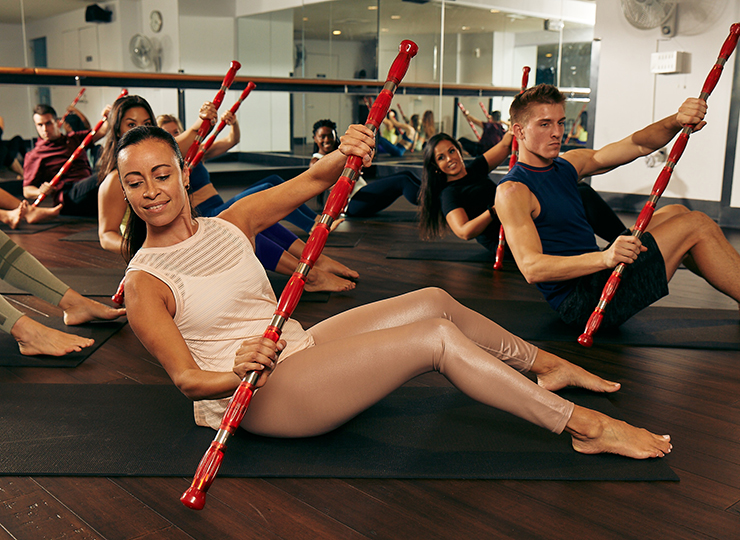
Pilates builds strength without making you feel like you’re training for a bodybuilding competition. Unlike traditional weight training, which often isolates one muscle at a time, Pilates teaches your muscles to work together through slow, controlled movements that build balanced, functional strength.
In Pilates, every exercise involves your whole body. Your legs move, your arms help, your back stabilizes, and your core muscles (especially the rectus abdominis and transverse abdominis) are always engaged.
This ongoing engagement improves muscle strength and creates stability that helps you move safely in daily life.
Pilates also builds muscle endurance through higher repetitions, longer holds, and steady resistance from springs, bands, or your own body weight.
These repeated, precise movements train your muscles to handle longer periods of tension. This is great for runners, lifters, and anyone who wants to stay strong without putting too much stress on their joints.
What makes Pilates unique is its focus on deep stabilizing muscles. These small muscles help you keep good alignment, improve posture, and move smoothly. Strengthening them can improve your performance in everything from squats to sitting at your desk.
In short, Pilates builds muscle in a way that supports your whole body and helps you move more efficiently.
Discover: What Does Pilates Do for your Body?
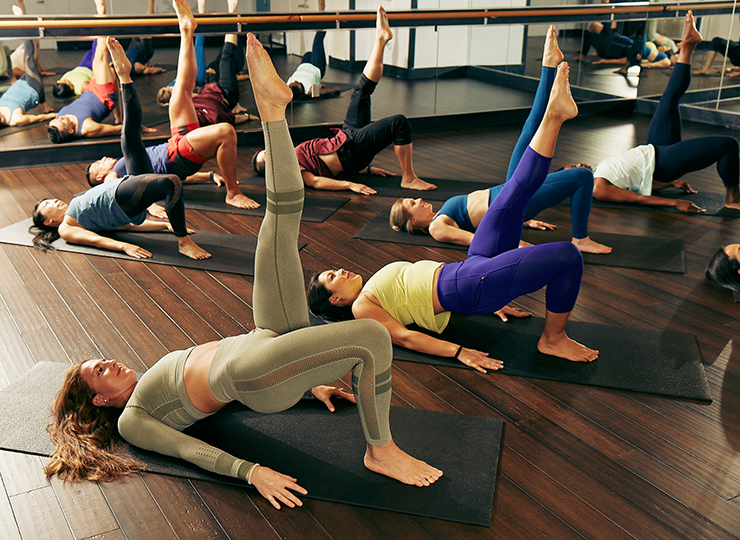
Here’s how Pilates targets each major area, with examples you can try in your next mat or reformer session.
Pilates is famous for firing up the abdominal muscles, especially the rectus abdominis and transverse abdominis. In classic mat moves like Hundreds, Roll-Ups, and reformer Short Spine, you learn to brace your core so the abs, not your neck or hip flexors, do the work. That’s why your core feels “awake” after even a short Pilates session.
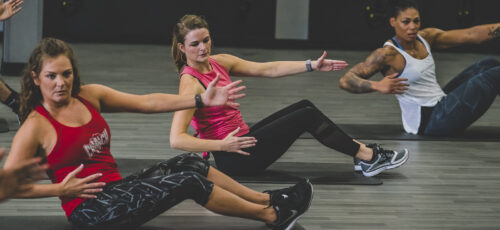
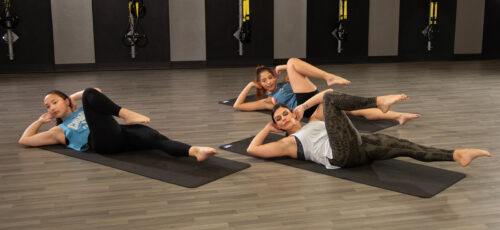
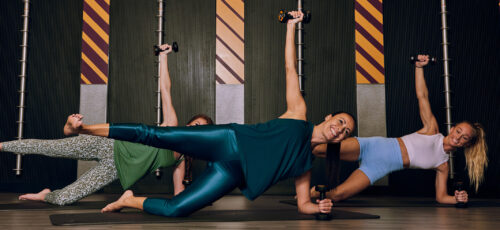
Rotational exercises like Criss-Cross, Side Planks, and Reformer Twists train your obliques to stabilize your trunk during turns and when carrying things. Pilates teaches you to rotate from your ribs and pelvis, building strength you can use for lifting groceries or turning quickly in sports.
Moves like Swan, Swimming, and Pulling Straps strengthen the muscles along your spine. These exercises build endurance in your back, so standing tall feels natural instead of tiring.
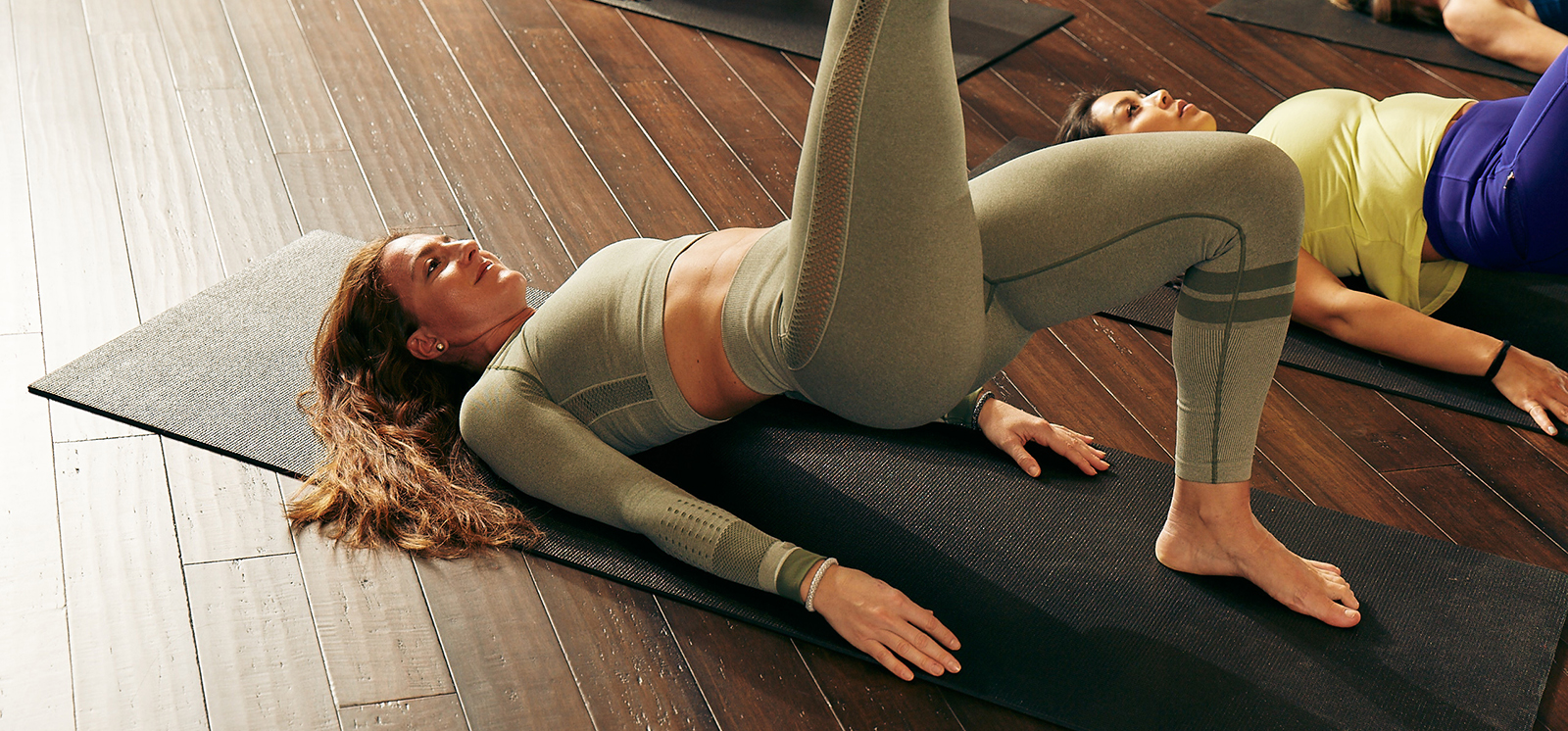
Exercises like Bridges, Clamshells, and the Side-Lying Series build glute strength, which helps with walking, hip stability, and knee alignment. In reformer Footwork, your glutes and hamstrings work together for smoother, stronger lower-body movement.
Pilates includes pelvic-floor engagement as part of its focus on breathing and centering. This helps improve stability, balance, and control both during exercise and in daily life.
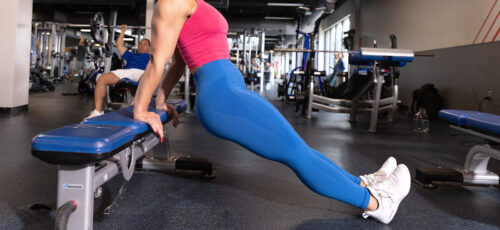
Pilates upper-body exercises focus on how your shoulder blades move and stay stable. Moves like Plank-to-Pike, Arm Circles, and Reformer Pull-Straps help improve shoulder stability, posture, and pressing strength.
Pilates also works your quads, hamstrings, calves, lats, and chest, but its main focus is building a strong, balanced core, hips, and shoulders.
Read: How to Get Rid of Abdominal Fat or Visceral Fat and Live a Healthier Life
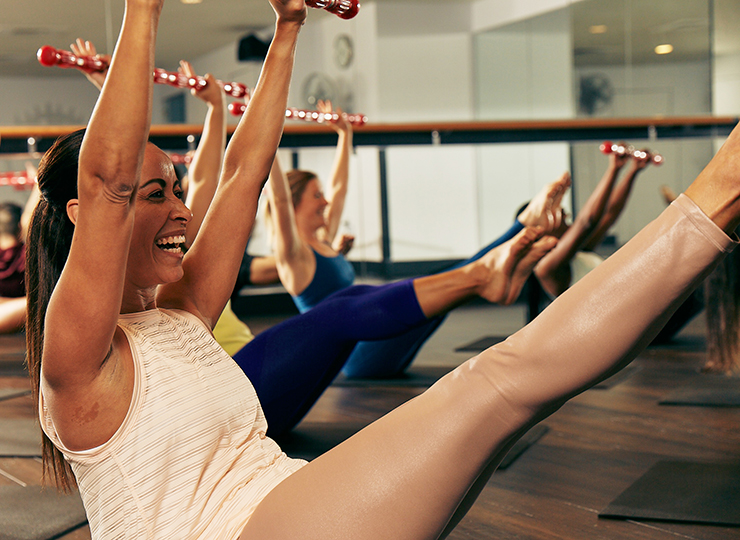
Wall, Mat, and Reformer Pilates can all help you build strength, but each works differently. If you want steady, measurable strength gains, Reformer Pilates is often the best choice because its spring resistance can be adjusted for different levels and movements.
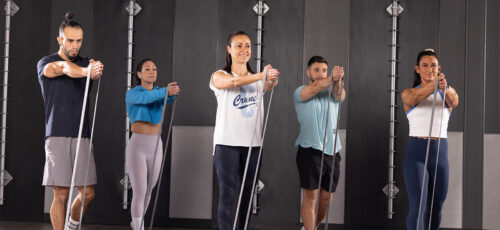
Reformer Pilates uses a moving carriage and adjustable springs to create external resistance, allowing you to perform slow, controlled, strength-focused exercises.
Think footwork, short box, knee stretches, and pulling straps—all of which challenge your muscles in longer ranges with guided support.
Research shows that Reformer training improves muscle strength and endurance more effectively than Mat Pilates, especially when performed three times per week.
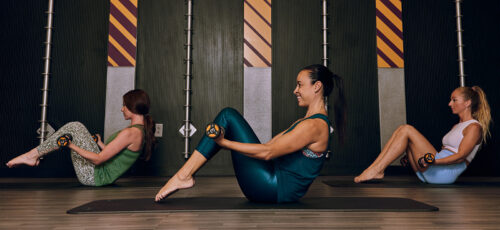
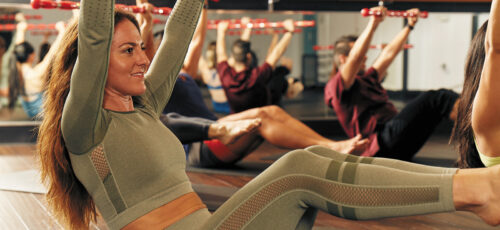
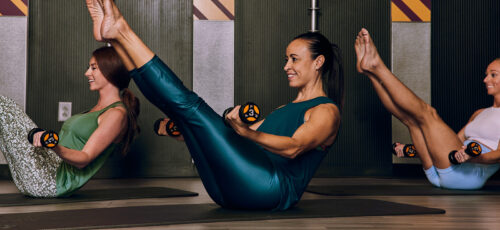
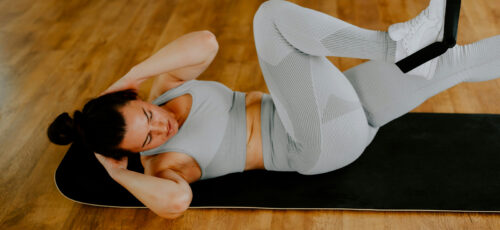
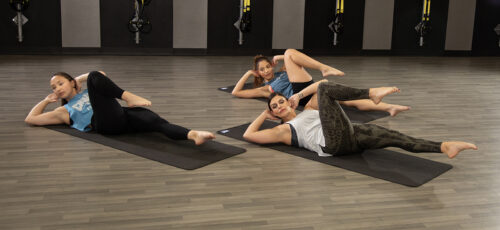
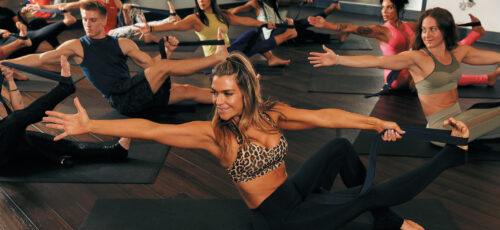
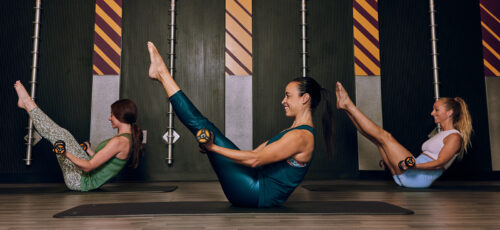
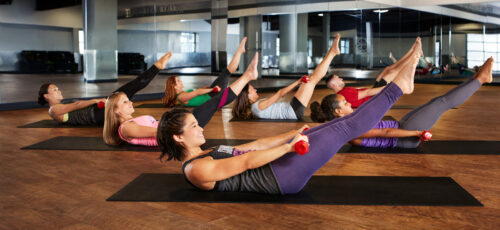
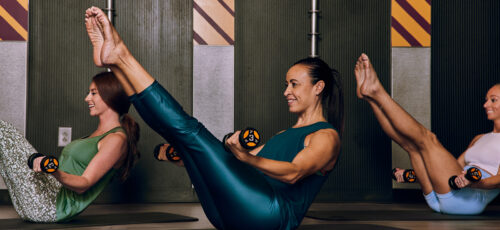
Mat Pilates uses your body weight, long-lever positions, and core control. Moves like the hundred, roll-ups, side planks, and leg-lowering series work your abs, obliques, hips, and back. It’s great for building basic strength, balance, and endurance, but you can’t add much resistance beyond your own body weight.
Wall Pilates uses mat-based movements with the support of a wall to help you improve alignment and add gentle resistance. Exercises include wall sits, wall-supported planks, and guided core routines. It’s easy to access, low-impact, and effective, but you’ll see slower strength gains compared to Reformer Pilates.
| Feature | Pilates Strength Training | Traditional Weight Training |
| Resistance Type | Bodyweight, springs, bands | Dumbbells, barbells, cable stacks |
| Muscle Focus | Full body with emphasis on deep stabilizers | Often isolates major muscle groups |
| Risk of Injury | Low-impact and joint-friendly | Higher risk with heavy loads or poor form |
| Muscle Definition | Creates lean, toned, balanced musculature | Can increase muscle size or bulk |
| Flexibility & Mobility | Improves mobility while strengthening | May reduce flexibility if stretching is skipped |
| Core Engagement | Core activated in nearly every movement | Primarily targeted in specific exercises |
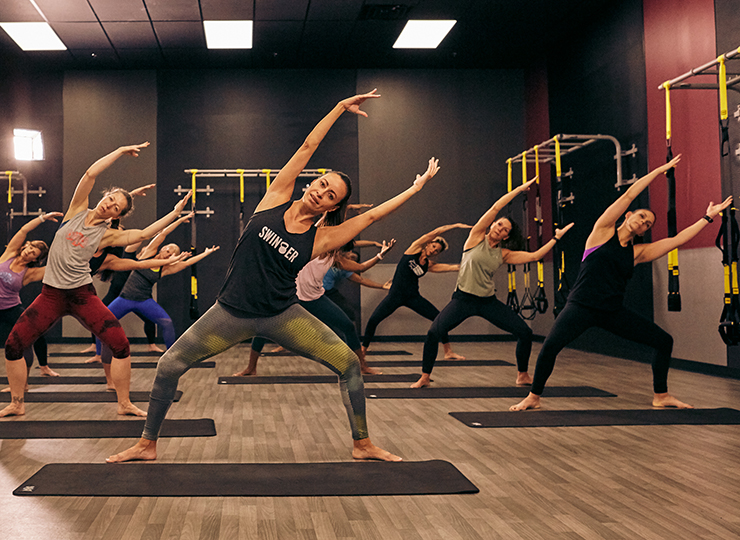
Pilates may not look like a typical muscle-building workout, but when you combine it with traditional strength training, it helps you build balanced, functional strength. Weightlifting increases muscle mass, while Pilates improves core stability, mobility, and control—all important for lifting more, moving better, and avoiding injury.
For example, you might do heavy squats one day and then use Pilates the next day to strengthen your glutes, core, and hip stabilizers.
You can also add Pilates push-ups, teasers, or single-leg stretches with resistance bands to support your chest, abs, and hip flexors between lifting days. This combination builds strength and improves your alignment and movement.
Here are some tips for adding Pilates to your muscle-building routine:
Before trying advanced reformer exercises, start with the basics. Learn Pilates breathing, alignment, and controlled movement. Mastering moves like the hundreds, bridges, and leg circles will help you lift more safely and effectively later on.
Alternate Pilates sessions on rest days or mix in Pilates-inspired exercises during strength workouts. For example, after deadlifts, add pulling straps–style back extensions to strengthen your spinal extensors and improve posture.
Pilates is all about precision. A slow, controlled set of 8 single-leg lowers will activate more muscle fibers than 30 rushed reps.
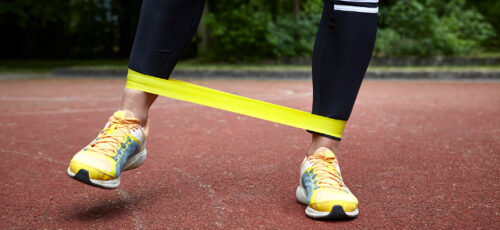
Increase the spring tension on the reformer, add resistance bands, or try more challenging exercises like advanced teasers. Your muscles get stronger as you increase the difficulty.
Your muscles need fuel. Eat enough protein, carbohydrates, and healthy fats, stay hydrated, and make sure you get enough rest so your body can recover and get stronger.
If something doesn’t feel right, make adjustments or talk to a qualified instructor. Pilates should challenge you, but it shouldn’t cause pain.
Combining the precision of Pilates with the strength of weight training can help you improve your posture, lift better, and build stronger muscles all over.
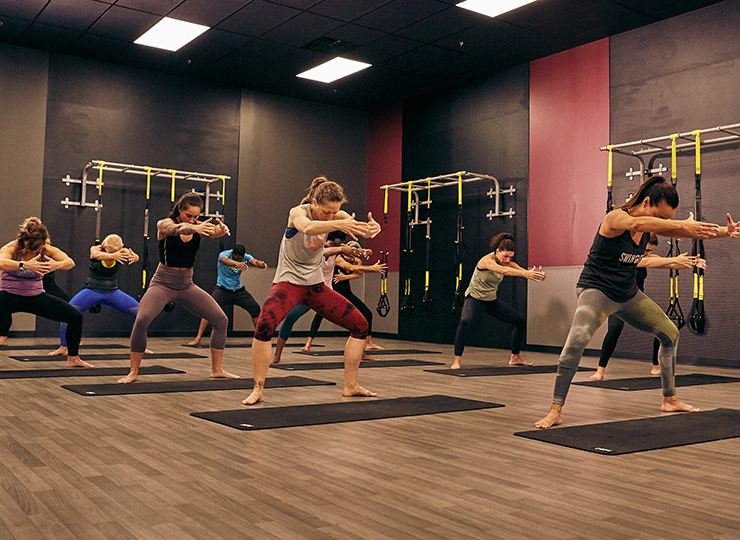
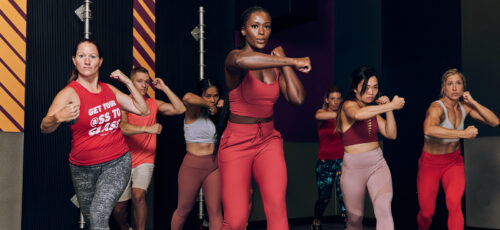
Experience how fun and dynamic Pilates can be at Crunch Fitness. Each class combines precision, power, and energy. Our Pilates classes are designed to challenge your body, clear your mind, and help you move with strength and confidence.
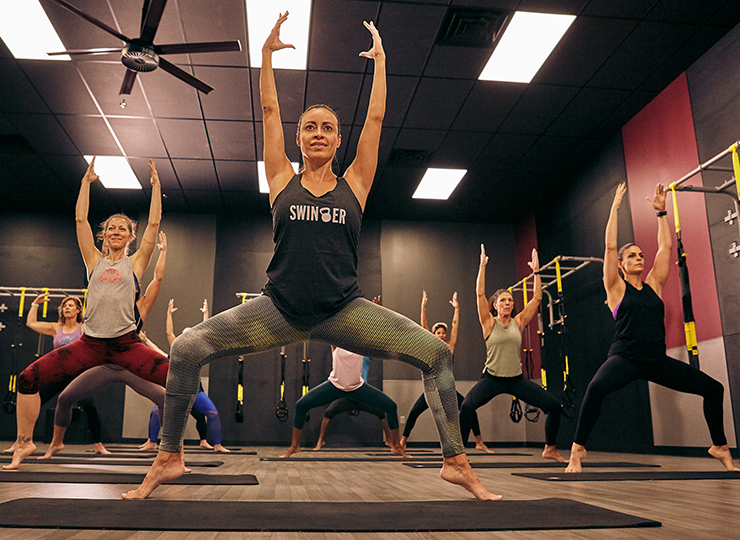
Crunch Fitness makes it easy and effective to build muscle with Pilates by offering expert instruction, smart programming, and a high-energy atmosphere.
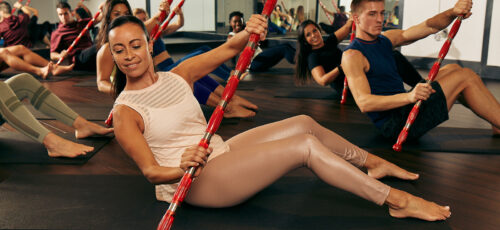
Our Reformer, Iron Mat, and Hot Pilates classes use controlled resistance, body-weight exercises, and core-focused movements to work deep muscle fibers that traditional lifts may miss.
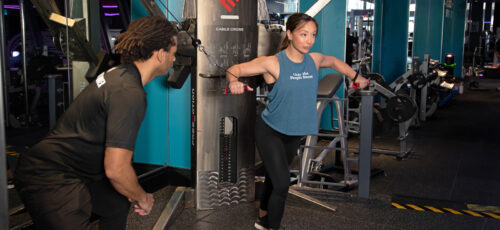
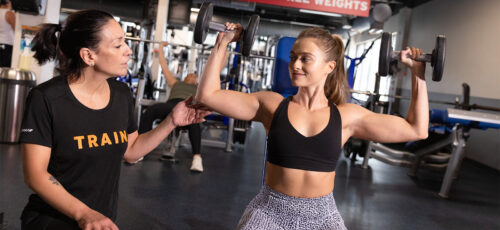
Our personal trainers guide you through every rep, helping you master alignment, breathing, and core engagement, key techniques that improve muscle activation and reduce injury risk.
With regular classes and supportive coaching, Crunch Fitness gives you the tools you need to get stronger, step by step.
Crunch promotes a culture of positivity, inclusivity, and fun with no judgments by providing an environment for all individuals, regardless of their health and fitness goals. Find a Crunch gym near you to try our free trial membership, or join Crunch now. We’re here for you – at the gym or at home. Access the best live & on-demand workouts anytime, anywhere with Crunch+. Ready to get sweaty? Try hundreds of workouts for free! Start your free trial now!
Pilates builds lean, functional muscle, especially in your core, hips, and glutes. Instead of focusing on bulk, it increases muscle endurance, control, and definition, giving you a stronger, more sculpted look.
Yes, Pilates is a form of resistance training. You work against your own body weight, plus added tension from springs, straps, and bands on the Reformer. Slow, controlled movements and long lever positions also create significant resistance without heavy weights.
Most people see noticeable strength and definition with 2–4 Pilates sessions per week. Including at least one Reformer class enhances results thanks to its scalable resistance. Consistency and proper recovery are key.
Generally, yes. The Reformer allows you to progressively increase resistance, maintain muscle tension, and challenge more muscle fibers. Research shows Reformer training leads to greater gains in muscle strength, endurance, and performance compared to Mat-only workouts.
Wall Pilates improves alignment, stability, and core control, using the wall for guidance and light resistance. It’s great for beginners and low-impact training, but offers less muscle-building potential than Reformer due to limited resistance options.