









Hypertrophy vs. Strength Training – Which Approach Should You Choose?
March 30, 2026

Which Training Method Is Best: Hypertrophy vs. Strength Training?
The right training method depends on your goals at the gym. If you want to lift heavier and get stronger, focus on strength training. If your aim is to build bigger muscles, hypertrophy training is a better choice. If you’re unsure where to begin, a qualified personal trainer can help you figure out your goals and set up a plan.
People often get confused when comparing hypertrophy and strength training because they look so similar. Both use resistance training, compound moves like squats and bench presses, and planned sets and reps. However, the main difference is the purpose behind each workout.
Strength training focuses on doing fewer reps with heavier weights to help you lift more and increase your one-rep max. Hypertrophy training changes the number of sets and reps to target muscle fibers and help your muscles grow.
So, which approach is right for you? In the next section, we’ll explain the main differences, point out what they have in common, and help you decide how to pick or mix both methods for better results.
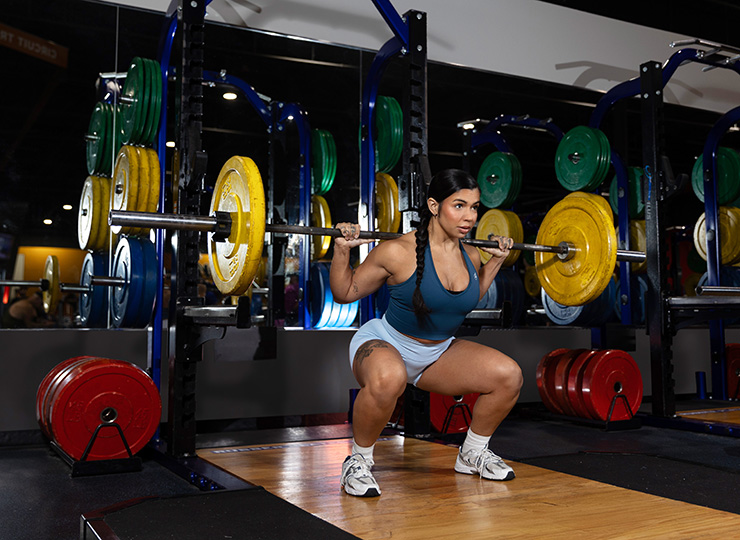
Both hypertrophy and strength training are types of resistance training, but how you set up your workouts really affects your results. Whether you want to build muscle or get stronger, things like reps, sets, rest, intensity, and exercise choice all matter.
Let’s explain it in simple gym terms.
Repetition range is one of the biggest differences.
Doing fewer reps with heavier weights challenges your nervous system and builds strength. Doing more reps increases time under tension, which helps your muscles grow.
Example:
Both methods build muscle, but the way they do it is different.
The number of sets affects your total training volume and how you increase the challenge over time.
A strength workout might look like:
A hypertrophy workout might include:
Doing more total sets and reps usually helps you gain more muscle.
Rest periods are important for your results.
Heavy lifts need longer rest so you can keep up your performance and intensity. Shorter rest during hypertrophy training increases stress on your muscles, which helps them grow.
Intensity refers to how heavy the weight is relative to your one-rep max (1RM).
Lifting heavier weights builds strength. Using moderate weights lets you do more reps and increase your total training volume.
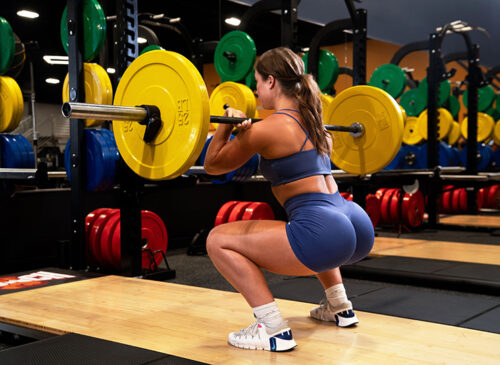
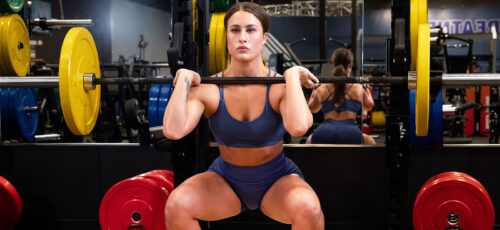
Strength programs emphasize compound lifts like:
Hypertrophy programs use both compound exercises and isolation moves, along with machines, to target specific muscles.
Strength training uses heavier weights for fewer reps. Hypertrophy training uses moderate weights that you can move with good control through the full range of motion.
If you’re pushing hard to finish one heavy rep, you’re focusing on strength. If you feel a burn around the tenth rep, you’re working on hypertrophy.
A strength-focused program aims for better performance, lower rep ranges, and steady progress. A hypertrophy-focused program puts more emphasis on muscle fatigue, higher training volume, and variety.
Both types of training work best with good planning and enough recovery to prevent overtraining.
Now that you know the differences, let’s look at what these two training styles have in common.
Discover more: How to Begin a Strength Training Program
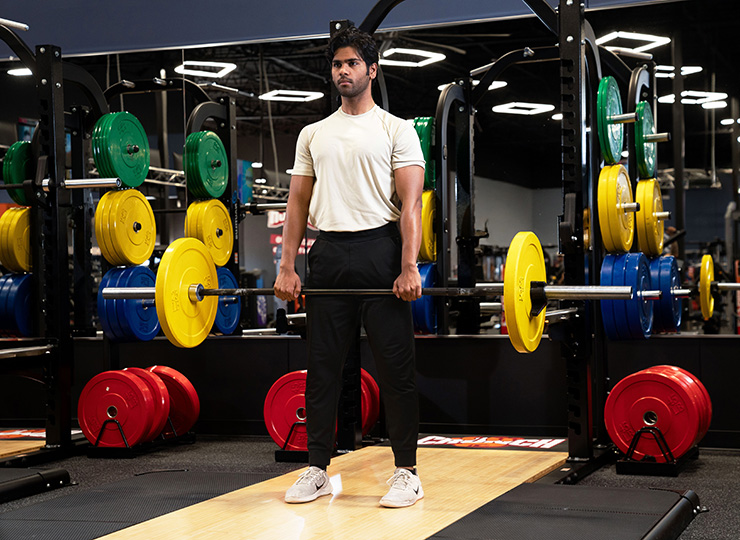
Hypertrophy and strength training might look different, but research shows they have more in common than you might think. Both are resistance training, both use progressive overload, and both improve muscle size, strength, and overall health when done regularly.
Here’s what the research shows.
Both strength training and hypertrophy training increase muscle mass.
A meta-analysis found that muscle growth can happen with many different rep ranges, as long as your total training volume is high enough. So, whether you do 5 heavy reps or 10 moderate reps, your muscles can still grow.
Heavy compound lifts like squats and deadlifts work your strongest muscle fibers. Doing more reps increases the time your muscles are working. Both methods use different approaches, but both lead to muscle growth.
This is where it gets interesting.
A study in Sports Medicine showed that heavier loads produce greater maximal strength gains, but moderate loads still significantly improve strength, especially in beginners and intermediate lifters.
Why? Two reasons:
So, even if you focus on hypertrophy, you’ll still get stronger over time.
Research shows that lifting weights makes your bones stronger and lowers your risk of osteoporosis. Regular strength training also helps your joints stay stable and reduces your risk of injury.
Other studies suggest that resistance exercise helps your heart and lowers risk factors for heart disease.
Both hypertrophy and strength training support:
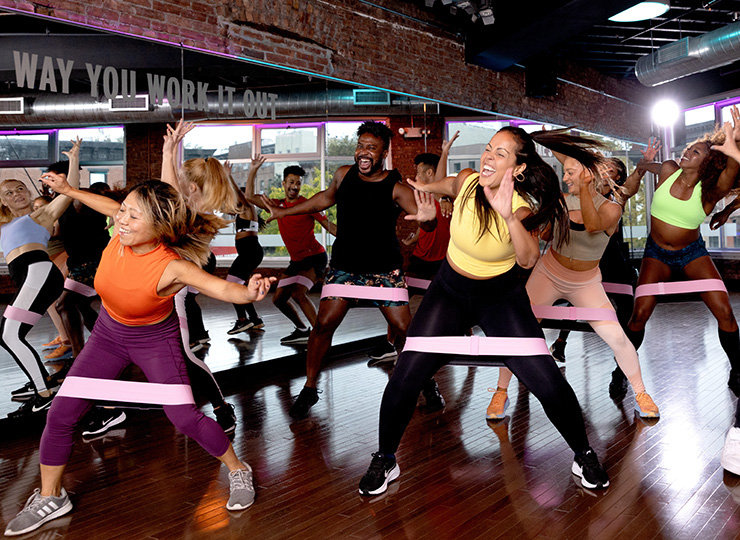
Both hypertrophy and strength training offer big health benefits. Each has its own strengths, depending on your goals. Here’s what the research says.
Hypertrophy training isn’t only for building muscle. It also supports your long-term health.
A 2022 review published in Exercise, Sport, and Movement found that resistance training improves mobility, metabolic health, physical function, and even cognitive performance. These factors directly influence quality of life and long-term health outcomes.
Even more compelling? Research published in the American Journal of Preventive Medicine shows resistance training is associated with a reduced risk of death from cardiovascular disease, cancer, and all causes.
You don’t have to lift more than 70% of your one-rep max (1RM) to get these benefits. So, hypertrophy-focused training really does make a difference.
Other proven benefits include:
Research from the Journal of Strength and Conditioning Research also confirms that even moderate loads can increase strength, just not to the same degree as heavy-load strength training.
In other words, you’ll still get stronger as you build muscle.
Strength training gives you all the usual benefits of resistance training, but it especially boosts your ability to produce force and increases bone density.
A study published in Osteoporosis International found that bone mass and density improve most when training at 80–85% of 1RM, progressing load over time, and targeting large muscle groups like those used in squats and deadlifts.
That’s what classic strength training looks like.
And if your goal is increasing your one-rep max? A 2017 meta-analysis in the Journal of Strength and Conditioning Research confirmed that high-load training (above 70% 1RM) produces significantly greater strength gains than lighter loads.
Strength training benefits include:
Even though strength training isn’t just for building muscle, you’ll still gain muscle as you get stronger.
Choosing between hypertrophy and strength training doesn’t have to be confusing. It depends on your fitness level, your goals, and what fits your lifestyle. Both are great options, but the best choice is the one that works for you.
If you’re new to lifting, it’s usually best to start with moderate reps, controlled sets, and a level of intensity you can handle. Hypertrophy training helps you build muscle, improve joint stability, and learn good form on exercises like squats, bench press, and deadlift.
Beginners often respond well to:
More experienced lifters might move to heavier weights and structured strength training cycles that focus on their one-rep max (1RM). This approach needs good technique, longer rest, and careful recovery to prevent overtraining.
Your goal drives your training program.
Choose hypertrophy training if you want:
Choose strength training if you want:
Both methods help you get stronger and support long-term health. The main differences are in the number of reps, how heavy you lift, and your total training volume.
If you like lifting heavy weights and tracking your progress, strength training might keep you motivated. If you prefer different workouts, moderate weights, and feeling the muscle “pump,” hypertrophy training could be a better fit.
For many people, mixing both styles helps them stay consistent, recover better, and fit training into their lives.
Want to build real strength and muscle? You don’t have to pick just one method. A good training plan can mix heavy compound lifts for strength with moderate-rep work for muscle growth.
Here’s a simple gym split you can try.
Start with heavy resistance training to build muscular strength:
Then shift into hypertrophy-focused work with slightly higher reps and controlled tempo:
This mix works several muscle groups and balances intensity with training volume.
Build lower-body strength first:
Then switch to exercises that focus on building muscle and control:
Looking for more ideas for strength and hypertrophy workouts? Check out more muscle-building guides, or talk to a Crunch Fitness Personal Trainer for a program that fits your goals.
Resistance training is a great way to build muscle and get stronger. With good technique, both hypertrophy and strength training are safe and very effective. But, like any training plan, there are risks if you don’t manage intensity, volume, and recovery well.
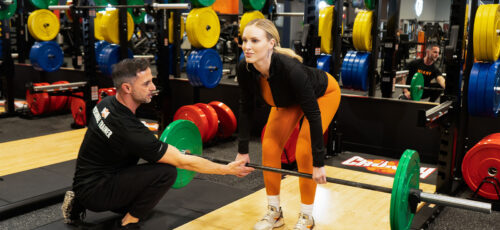
Most injuries in strength training and hypertrophy workouts come from improper form. Rounding your back during deadlifts, letting your knees cave during squats, or rushing reps without control increases strain on joints and muscle tissue.
Moving with control, keeping good alignment, and learning proper technique before adding weight are key to long-term progress and healthy joints.
If you increase your training volume too fast or work the same muscle group without enough rest, you can get overuse injuries. This often happens when people add more sets, reps, or intensity without giving their muscles time to recover.
Recovery is an important part of your training, not just a break.
Training to failure means reaching the point where you can no longer complete a rep with proper form. In strength training, this often occurs with heavy loads near your one-rep max (1RM). In hypertrophy training, it typically happens during higher reps with moderate weight.
Pushing to failure sometimes can help you progress, but doing it too often can raise your risk of injury and slow down recovery.
Lifting more weight than you can handle hurts your form and raises your risk of injury. If bodyweight squats are hard, focus on doing good reps before adding more weight.
Good resistance training is about steady progress, patience, and using the right technique.
Getting stronger means following a plan that matches your goals. At Crunch Fitness, building real strength comes from expert guidance, the right equipment, and a motivating environment.
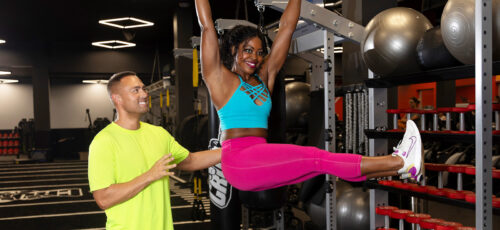
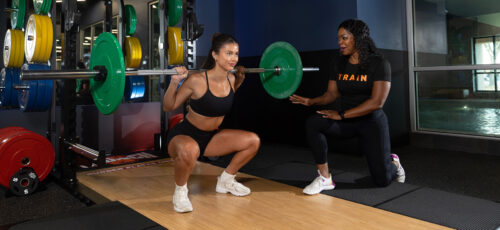
Strength training is most effective when it’s tailored to you. A professional assessment can find your fitness level, movement patterns, and any muscle imbalances. Then, a custom program can help you progress safely with the right sets, reps, and intensity.
No matter if your goal is a higher one-rep max, more muscle, or better performance, a structured program helps you make progress and lowers your risk of injury.
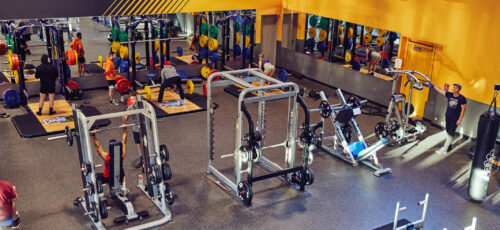
To build strength, you need variety. Crunch Fitness offers barbells, dumbbells, squat racks, benches, resistance machines, and training areas for compound exercises like squats, deadlifts, and bench press.
Functional training spaces let you work several muscle groups and improve your stability, coordination, and strength for everyday movements.
If you like working out with others, strength-focused group fitness classes give you structure and accountability. Expert coaches help with technique, manage intensity, and make sure you train safely, so you can build strength with confidence.
Crunch promotes a culture of positivity, inclusivity, and fun with no judgments by providing an environment for all individuals, regardless of their health and fitness goals. Find a Crunch gym near you to try our free trial membership, or join Crunch now. We’re here for you – at the gym or at home. Access the best live & on-demand workouts anytime, anywhere with Crunch+. Ready to get sweaty? Try hundreds of workouts for free! Start your free trial now!
Neither option is always better. It depends on your goal. Hypertrophy training helps you build muscle mass, while strength training is about lifting heavier weights and improving your one-rep max. Choose the method that fits what you want to achieve.
Bodybuilders mostly use hypertrophy training. Their workouts focus on moderate reps, higher volume, and steady intensity to build muscle size and definition. They do get stronger, but growing muscle is their main goal.
Yes, hypertrophy training can help you get stronger. When you build more muscle, you can produce more force, even if you are not lifting very heavy weights. You might not reach your highest one-rep max, but you will still gain strength.
You can get stronger without getting much bigger because strength training helps your body use your muscles more efficiently. Your body learns to recruit muscle fibers and produce more force without adding much size. This often happens with low-rep, high-intensity workouts.
For most beginners, hypertrophy training is a good place to start. Using moderate reps and manageable intensity helps you build muscle, learn proper technique, and make your joints more stable before moving on to heavier strength training.
Strength training is usually better for building maximum force and power. Still, mixing strength training with hypertrophy exercises often gives the best results for athletic performance and muscle growth.