








Best Quad Exercises for Bigger & Stronger Quadriceps | Crunch Fitness
October 7, 2026
If you want to build bigger quads, there isn’t just one exercise that will do the trick. The best quad workouts mix squats, lunges, split squats, leg presses, machine moves, and isolation exercises.
Your quadriceps are four muscles on the front of each thigh. They help straighten your knees, keep your lower body stable, and give you power for running, jumping, and lifting.
This guide covers quad exercises for both beginners and advanced lifters. We’ll also explain quad anatomy, signs of weakness, and common mistakes. You’ll learn how to strengthen your quads, choose the right exercises, and build a program that doesn’t make leg day feel overwhelming.
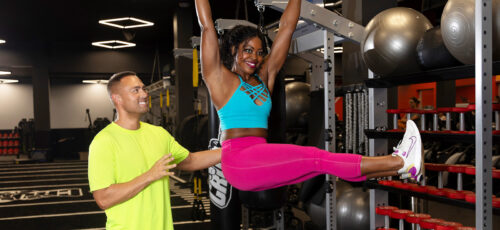
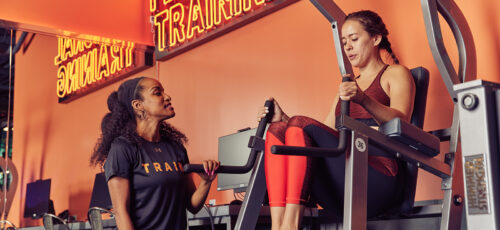
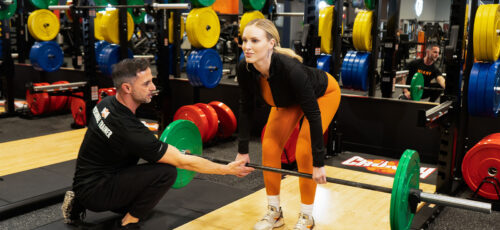
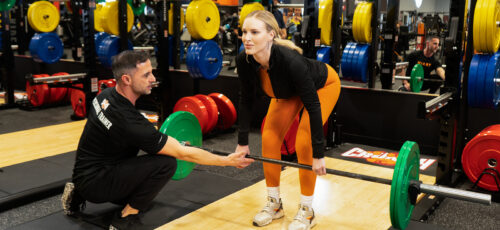
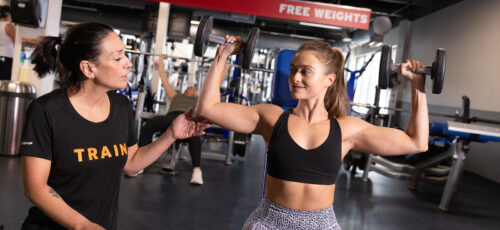
You can do many quad strengthening exercises by yourself. However, a Crunch Fitness personal trainer can check your strength, help you with your form, and create a plan to build bigger, stronger legs while keeping your knees healthy.
Are you ready to train smarter?
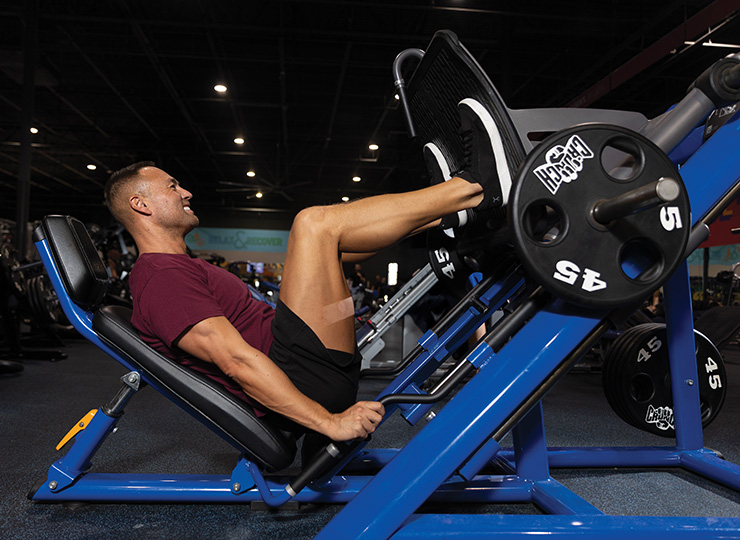
To start quad training, mix compound lifts with isolation exercises and pick movements that fit your current level. Your quads might be ready, but you don’t have to push them too hard right away.
Do you need more ideas? Explore these compound exercises for stronger quads before planning your next leg day.
The best quad exercises for beginners are simple moves that build foundational strength while teaching good knee alignment, controlled depth, and lower-body coordination. Focus on smooth reps and a comfortable range of motion before adding heavier weights.
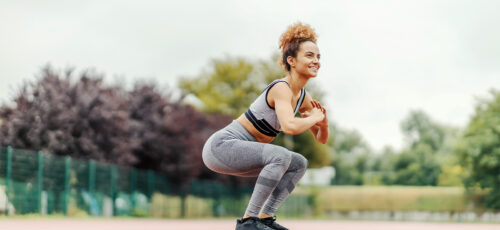
The bodyweight squat teaches the basic movement pattern used in many quad exercises. Keep your chest lifted, feet firmly planted, and knees traveling in the same direction as your toes. Lower only as far as you can while maintaining control and balance.
How to Use It
Holding a light dumbbell close to your chest helps you stay upright and puts more focus on your quads. The weight also acts as a counterbalance, making the goblet squat a good way to start learning loaded squats.
How to Use It
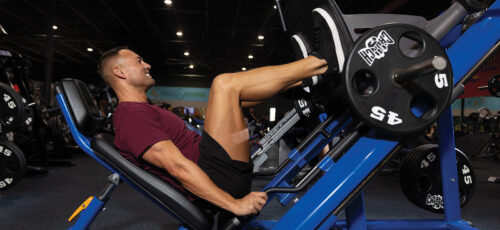
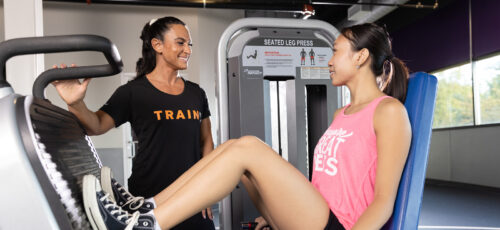
The leg press gives you extra stability as you build pressing strength. Place your feet about shoulder-width apart and keep your knees in line with your toes. Lower the platform until you reach a comfortable depth, making sure your hips stay on the seat.
How to Use It
Discover more: What Equipment Does Crunch Fitness Provide?
Leg extensions target the quadriceps without needing the coordination of a squat or lunge. Adjust the machine so your knees line up with the pivot point, then lift and lower the weight with control. Let your quads do the work, not momentum.
How to Use It
The assisted split squat works each leg on its own, and a stable support helps you balance. Stand in a comfortable staggered stance, lower your back knee toward the floor, and keep your front knee in line with your toes.
How to Use It
Beginners should focus on good technique, a comfortable range of motion, and controlled lowering before adding more weight. These habits build better movement patterns and a strong base for future quad training. If you also want to improve body composition, look into exercises that help with fat loss and stronger legs.
Compound squat variations are excellent for building quad size and overall lower-body strength. Since they use your knees, hips, and ankles, these exercises work several muscle groups and let you use more weight than most isolation moves.
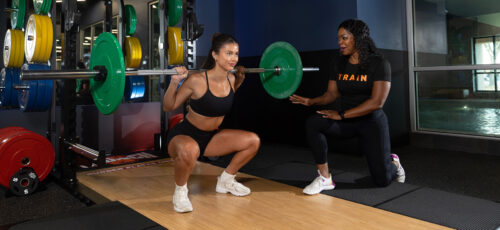
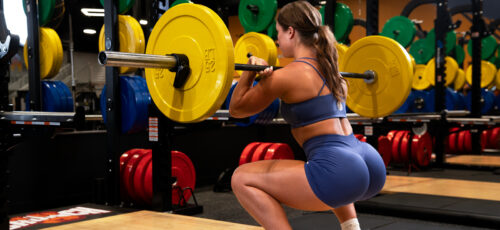
When you place the bar across your upper traps, your torso stays more upright compared to a low-bar squat. This position increases knee bend and puts more focus on your quads, while still working your glutes, hamstrings, and core.
How to Use It
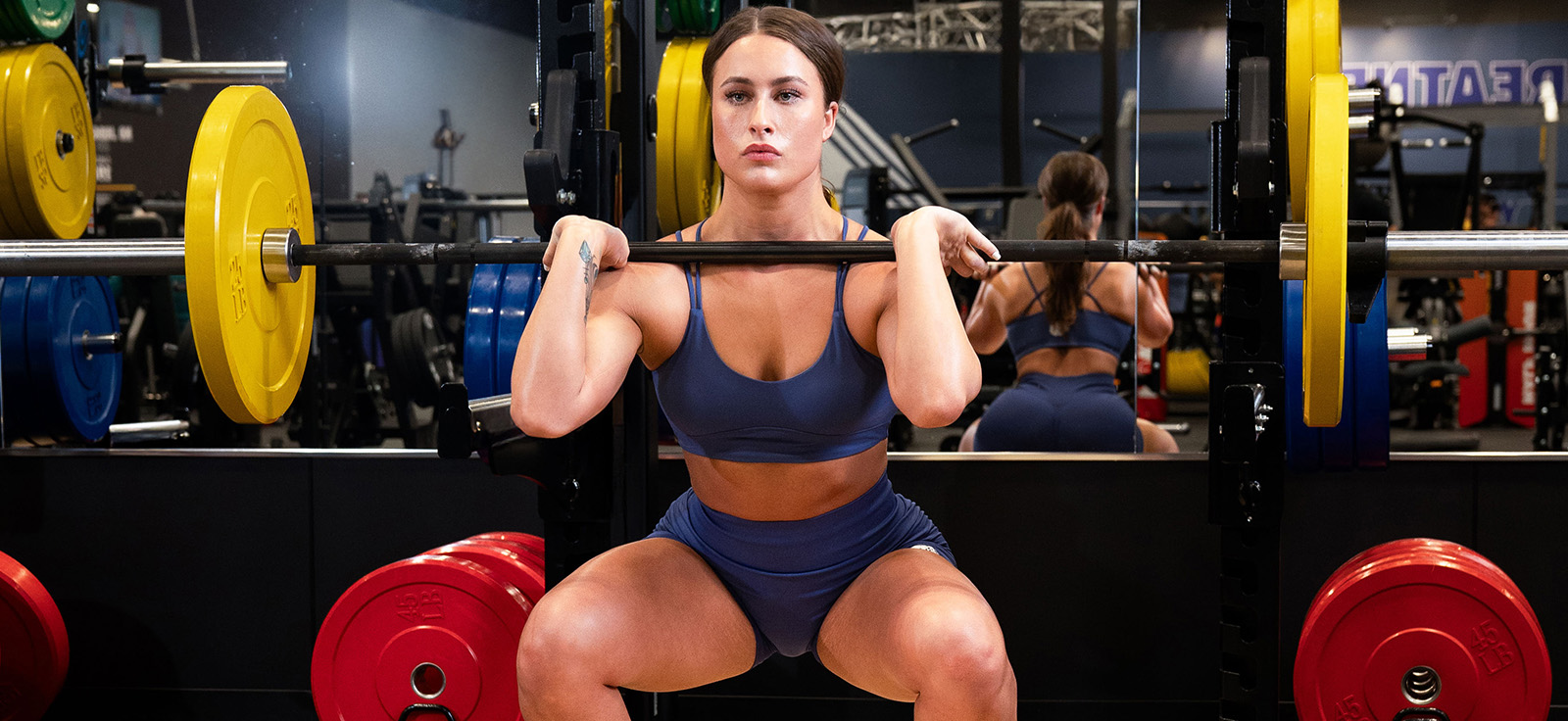
In a front squat, the bar rests on the front of your shoulders. This keeps your torso upright and challenges your core. The position puts more work on your quads, and you’ll usually use less weight than with a back squat.
How to Use It
Goblet squats aren’t only for beginners. Holding a dumbbell or kettlebell at your chest helps you stay upright, control your depth, and gives your quads a solid workout without needing a barbell.
How to Use It
Read: What Exercises Should I Do to Lose Leg Fat?
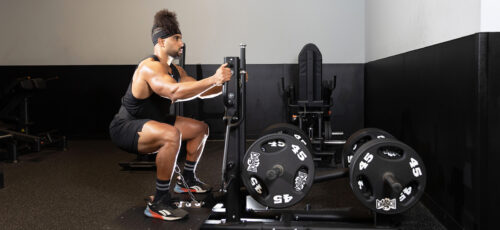
The hack squat machine supports your upper body and moves along a set path, so you can focus on working your legs. Placing your feet lower usually works your quads more, while a higher foot position targets your glutes and hamstrings.
How to Use It
The Bulgarian split squat works one leg at a time, building quad strength, balance, and coordination. If you keep your front foot closer and your torso upright, you’ll feel it more in your quads. A longer stance shifts the work to your glutes.
How to Use It
Compound squats help you get stronger in the gym and move better in daily life. Try adding more leg strength exercises at the gym to create a balanced lower-body routine.
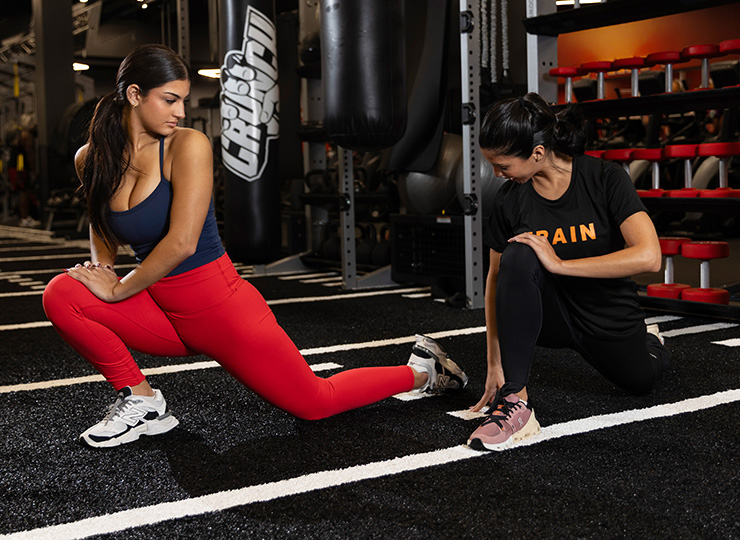
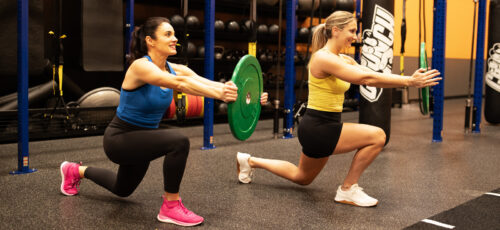
Lunge and split squat variations work one leg at a time. This can show you any differences in strength, balance, or coordination that regular two-leg exercises might hide.
These movements are also useful for building functional strength that carries over to running, climbing stairs, changing direction, and other daily activities.
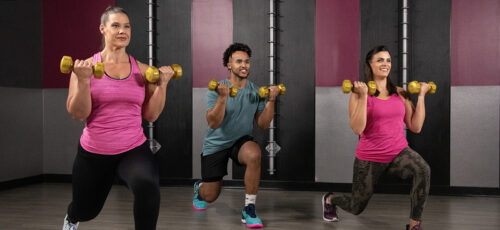
Walking lunges work your quads and help improve balance, coordination, and lower-body stability. Each step makes one leg control your movement down and then push you forward, which is great for sports and daily life.
How to Use It
Stepping backward in a reverse lunge helps you control your stride and keep your front leg stable. Reverse lunges work your quads and glutes, and they’re easier on your balance than walking lunges.
How to Use It
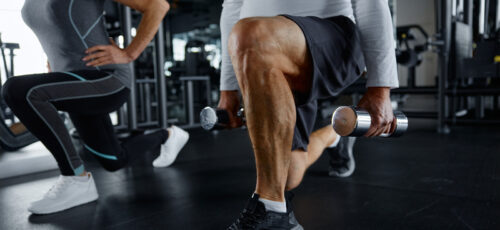
Weighted Bulgarian split squats are tougher because you lift your back foot and add weight to your working leg. Holding dumbbells makes it harder, and keeping your torso upright with a shorter stance works your quads more.
How to Use It
Step-ups help you build strength for climbing stairs, hiking, running, and other activities that use one leg at a time. A lower step is easier to control, while a higher step makes your knees and hips bend more. Pick a height where you can keep your whole foot on the platform.
How to Use It
Lateral lunges add side-to-side movement to your routine, instead of just moving forward and backward. They work your quads, glutes, and inner thighs, while building strength and control for directional movement.
How to Use It
Move slowly so you can notice if one side feels less stable, strong, or coordinated than the other.
Keeping your knees in the right position is more important than trying to lunge deeper, especially when you want to build strength and stability around your knees.
Mix these exercises with two-leg lifts, hamstring exercises, and other lower-body strength moves to create a balanced routine.
Leg press and machine quad exercises give you guided resistance and don’t require as much balance as free weights. They’re great for beginners learning the basics and for experienced lifters who want to add more sets without making every exercise a full-body challenge.
The leg press works your quads, glutes, and hamstrings, and supports your upper body. Placing your feet lower on the platform usually works your quads more, while a higher foot position targets your hips. A narrow stance can also make your quads work harder, but always choose a setup that feels comfortable and controlled.
How to Use It
The hack squat machine moves along a set path and supports your upper body, so you can focus on pushing with your legs. Putting your feet lower on the platform works your quads more, while a higher foot position works your glutes and hamstrings.
How to Use It
The leg extension machine targets your quads, so it’s good for focused work after compound exercises. Since you don’t need to balance much, you can add more quad training without getting as tired as you would from another heavy squat.
How to Use It
Despite the dramatic name, sissy squats are serious quad business. The movement allows the knees to travel forward while the torso and thighs remain relatively aligned, creating a strong quadriceps challenge. Beginners should use assistance and a shallow range before progressing.
How to Use It
The Smith machine moves the bar up and down in a fixed path, so you don’t have to balance as much but can still use a lot of weight. Set your feet so you can squat comfortably, keeping your heels down and your knees in line.
How to Use It
Beginners can use manageable resistance to develop control, while advanced trainees can add machine exercises after heavier free-weight lifts to increase muscle-building volume. If quad size is the goal, understanding the difference between hypertrophy and strength training can help you select suitable weights and repetition ranges.
Wondering what you’ll find at the gym? Check out what equipment Crunch Fitness offers and put together a quad workout that will leave your legs feeling it the next day.
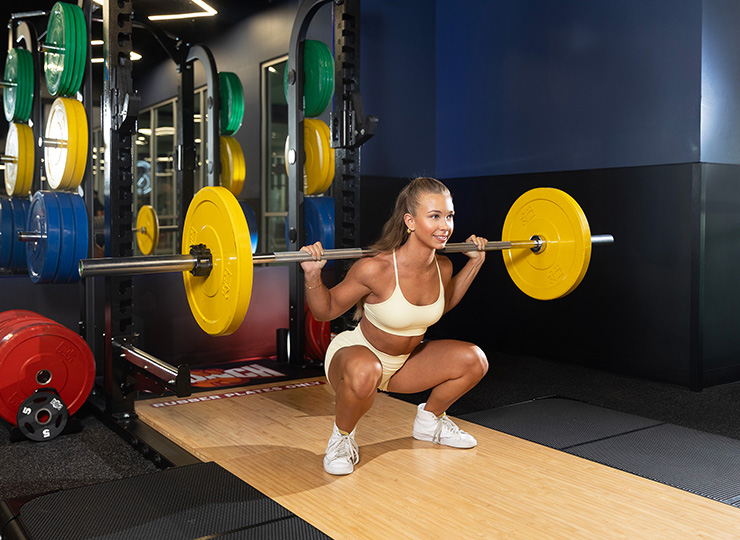
Advanced quad exercises challenge experienced lifters with heavier weights, bigger ranges of motion, single-leg moves, or explosive speed.
Before trying these, make sure you can do basic squats and lunges with good depth, knee alignment, core stability, and control.
If those fundamentals still need work, revisit this beginner’s guide to strength training before increasing the difficulty.
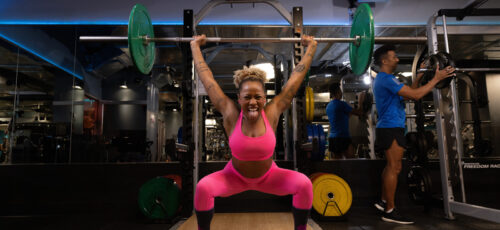
Heavy back squats allow advanced lifters to challenge the quads, glutes, hamstrings, and core with substantial resistance. Maintaining position under load requires established squat technique and the ability to brace effectively throughout each repetition.
How to Use It
Front squats build quad strength and help you practice the upright posture and front-rack position used in Olympic lifts. You’ll need good ankle, hip, wrist, and upper-back mobility, along with a strong core to keep your torso from tipping forward.
How to Use It
Jump squats teach your quads to move fast, which helps with explosive moves like sprinting and jumping. Use just your bodyweight or very light weight, since this exercise is about speed and good form, not lifting the heaviest load.
How to Use It
Deficit reverse lunges start with your front foot on a small platform, which lets you move through a bigger range of motion. This extra depth works your quads and glutes more and also requires better balance, hip mobility, and control than a regular reverse lunge.
How to Use It
The pistol squat is a tough move that tests your single-leg strength, balance, ankle mobility, and coordination. Make sure you’re comfortable with deep squats and assisted single-leg exercises before trying it without support.
How to Use It
Add advanced exercises slowly, and do them when you’re fresh so you can keep your form strong.
Do explosive exercises at the start of your workout. Always use safety equipment and a spotter when doing heavy squats.
These movements can support your ability to develop athletic skills that match your fitness goals, but more difficulty is only helpful when technique comes along for the ride.
A Crunch Fitness trainer can evaluateyour movement, suggest the right next steps, and help you tackle heavy or explosive quad training with more confidence and control.
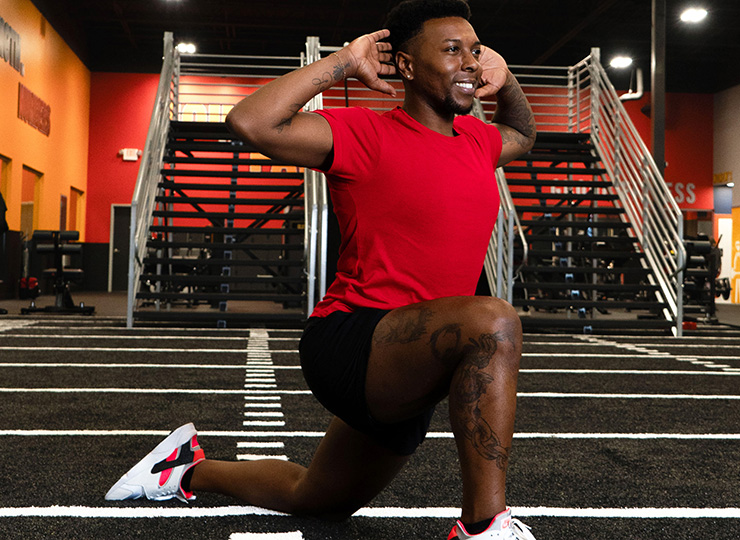
Quad strength is important because these muscles help you run, jump, and change direction. Strong quads boost your power and help keep your knees stable during landings, quick stops, and sports.
Quad strength helps you outside the gym too. They make it easier to climb stairs, get up from a chair, carry groceries, and stay steady when moving with weight. Building your quads also improves your leg size and shape, so quad training is good for both performance and appearance.
But don’t focus only on your quads during leg day. Training your hamstrings and glutes too helps build balanced strength around your knees and hips, which can lower your risk of injury and help you move better. Whether you’re new to squats or working on your sprint, quad training is key for leg development, daily movement, and athletic performance at any level.
Your quadriceps, or quads, are actually four muscles in each thigh. All of them help straighten your knee, and the rectus femoris also helps bend your hip. Here’s what each one does:
Different squats, lunges, machines, and foot positions change how the quads are challenged. Although no exercise completely isolates one section, variety helps build balanced, powerful legs and supports stronger knees.
Weak or underdeveloped quads can hurt your gym performance, daily movement, and knee control. Watch for these warning signs:
These signs can happen if you don’t train your quads enough, don’t use a full range of motion, or skip tough compound exercises. Spotting them early lets you change your program before they hold you back.
Training your quads regularly gives them enough work to grow, without trying to do everything in one big leg day. Make sure you rest enough between sessions.
Gradually increase resistance, repetitions, sets, or movement difficulty as you become stronger. Small, consistent increases keep your quads adapting.
Go as deep as you can in squats or lunges while keeping good form. Deeper positions work your quads more, but only if you can do them safely.
Squats, lunges, and leg presses build overall strength, and leg extensions let you focus more on your quads.
Make sure your knees move in line with your toes. Don’t let them cave in during squats, lunges, or presses.
Having balanced strength in the front and back of your thighs helps keep your knees stable, improves how you move, and boosts athletic performance.
Changing your stance or foot position a little can change which muscles work most. Try different setups, but don’t force yourself into uncomfortable positions or lose control.
A Crunch Fitness trainer can check your form, suggest the right next steps, and build a quad program that fits your experience and goals.
A good quad program should also include exercises for your hamstrings, glutes, and calves. This helps you build balanced lower-body strength and move better.
Include three types of quad work:
Add hamstring curls, hip hinges, glute exercises, and calf raises to keep leg development balanced.
Start your workout with heavy compound exercises when you have the most energy and focus. Then do single-leg exercises, and finish with isolation moves.
Train your quads two or three times a week, making sure you get enough rest. Beginners can start with 6–10 sets per week, and advanced lifters can do 10–18 sets if they recover well and keep good form.
Split demanding volume across multiple sessions if one workout begins affecting your technique. Explore more everyday strength exercises and ideas for balanced lower-body training.
Crunch Fitness helps you build your quads with expert coaching, lots of strength and cardio equipment, and fun group classes. Whether you’re just learning to squat or aiming for a new personal best, you’ll find options to build stronger legs.
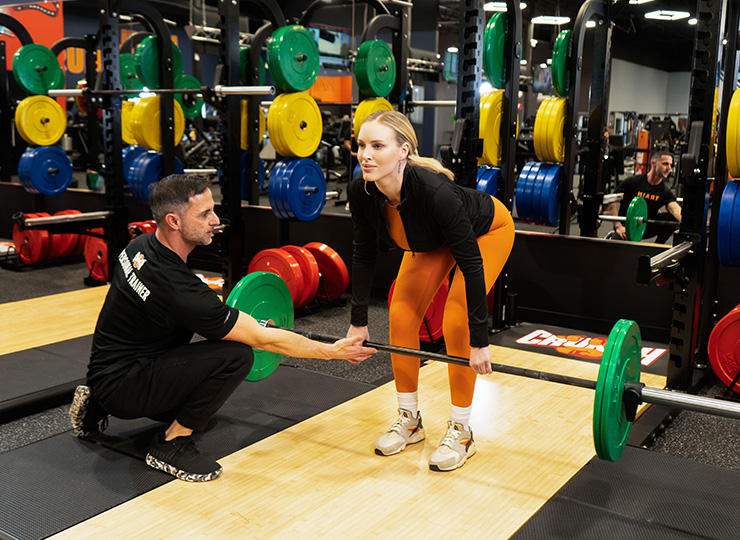
Crunch trainers can check your strength and how you move, then help you with squat depth, knee alignment, and overall technique. They can also create a program that grows with your goals, whether you want to build muscle, squat more, or get better at sports.
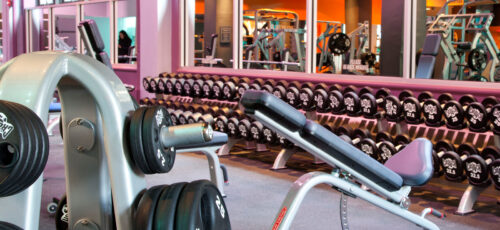
Crunch has a comprehensive selection of strength equipment, including squat racks, leg presses, hack squat machines, leg extensions, dumbbells, and special bars. This variety lets you practice as a beginner or go heavy with compound lifts and isolation exercises.
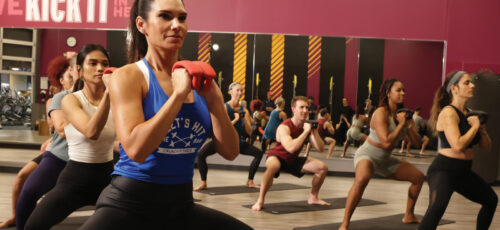
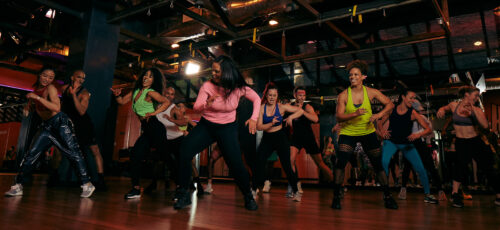
Crunch’s group fitness classes often include squats, lunges, circuits, and other leg exercises. With expert instructors, group motivation, and lots of variety, tough leg workouts can be more fun and easier to stick with.
Crunch promotes a culture of positivity, inclusivity, and fun with no judgments by providing an environment for all individuals regardless of their health and fitness goals. Find a Crunch gym near you to try our free trial membership, or join Crunch now. We’re here for you – at the gym or at home. Access the best live & on-demand workouts anytime, anywhere with Crunch+. Ready to get sweaty? Try hundreds of workouts for free! Start your free trial now!
Train your quads two or three times per week, depending on your experience and recovery. Leave at least one recovery day between challenging quad workouts.
You can work your quads and hamstrings on the same day or split them up. The key is to train both enough each week so your legs stay strong and balanced.
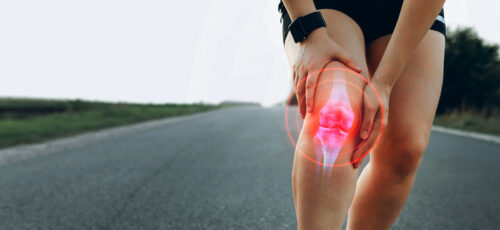
If your knees hurt during squats, it could be from lifting too much, doing too many reps, having limited mobility, using poor form, or an existing issue. Try using less weight and see a doctor if the pain sticks around, gets worse, or you notice swelling or your knees feel unstable.
Your knees might cave in if the weight is too heavy or you have trouble controlling your hips and knees. Try using lighter weights, focus on keeping your knees over your feet, and work on strengthening your glutes and hips.
Yes, you can build strong quads without doing regular squats. Exercises like leg presses, leg extensions, step-ups, lunges, and split squats all work well for your quads.
A gym membership provides more equipment and progression options for quad training. Compare the available benefits before choosing a gym membership that fits your routine.
Great gyms for quad training have squat racks, barbells, dumbbells, leg presses, hack squat machines, and leg extension machines. Try to find a gym with a good mix of machines and free weights that suits your experience and goals.