









Neck Strength Exercises to Support Better Posture | Crunch Fitness
October 7, 2026
Safe Neck Strength Exercises for Beginners
If you spend a lot of time on computers, phones, or laptops, your neck muscles are likely working harder than you think. Neck strength exercises can help. If you’re new to strength training, you might ask: Are neck exercises safe for beginners? Can they really help with neck pain and posture?
The good news is that, with the right approach, neck strengthening can support your spine, improve movement, and build strength to help fix forward head posture and “text neck.”
Simple exercises like chin tucks, gentle neck movements, and light resistance band work can activate your neck, shoulder, and core muscles, leading to better posture and recovery.
This guide covers beginner-friendly neck strengthening exercises, including ones you can do without equipment, resistance band options, key benefits, and common mistakes to watch out for. We’ll also explain how Crunch Fitness can help you safely build stronger neck muscles.
Let’s get started!

When most people think of strength training, they picture squats, bench presses, or deadlifts, not neck exercises. But your neck muscles are important for posture, movement, and stability, especially if you spend hours looking at screens.
Over time, forward head tilt, often called “text neck,” can cause muscle stiffness, neck pain, and poor posture. Strengthening the muscles that support your neck can help prevent these problems.
These exercises work the deep neck flexors, extensors, and rotators, and also engage your shoulder, back, and core muscles.
Let’s begin with some simple exercises for beginners.
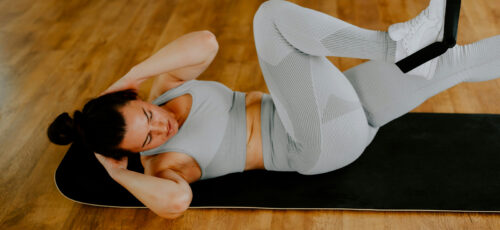
Chin tucks are one of the top exercises for working the deep neck flexors, which support your spine and help correct forward head posture.
Physical therapists and sports medicine experts often use this exercise in neck-strengthening programs because it improves posture without putting too much strain on your neck.
How to Perform
Tip
Don’t push your head into the floor. Focus on a gentle neck movement, not a crunch. Keep your jaw and neck relaxed so the deep neck flexors do the work.
After you’re comfortable with chin tucks, adding a head lift makes the exercise harder and works bigger neck muscles, like the sternocleidomastoid (SCM).
This exercise improves neck stability, which helps with posture and is also important for athletes in sports like rugby or other contact sports, where neck strength can protect against injuries.
Trainer Tip
Keep your chin tucked the whole time. If you lose that position, it can strain the muscles at the base of your skull and may cause tension headaches.
Read more: What Are The 10 Best Exercises for Building Upper Body Strength?
Your neck extensors, the muscles on the back of your neck, help keep your head in line with your spine. Strengthening them improves posture and reduces strain in daily activities.
How to Perform
Trainer Tip
Focus on reaching through the top of your head instead of lifting your neck too high. The aim is controlled strength, not moving as far as possible.
This exercise works the neck rotators, which are the muscles that turn your head left and right. These muscles help with everyday movements, like checking your blind spot while driving or looking around the gym.
Trainer Tip
Move slowly and only as far as feels comfortable. Fast or jerky movements can strain your neck muscles and ligaments.
Your neck side benders help keep your head and neck steady, especially when your shoulders and upper body are working during strength exercises.
Trainer Tip
Keep your body straight. Tighten your core and abs to help control the movement.
When bodyweight exercises become easy, using resistance bands is a good way to keep building neck strength safely.
Resistance bands allow you to gradually increase resistance training intensity, helping strengthen the neck flexors, extensors, rotators, and side benders while maintaining controlled movement.
Resistance bands are portable and easy for beginners to use, so you can do these exercises at home, at the gym, or even during recovery.
This exercise strengthens the neck flexors, which support posture and help prevent forward head tilt.
This movement strengthens the neck extensors, which help keep your head aligned during activities like lifting weights or maintaining posture during long workdays.
This exercise targets the neck rotators, improving head-turning strength and coordination.
This movement strengthens the neck side benders, which help stabilize the head during movement.
By combining these neck exercises with good posture, regular strength training, and recovery, you can slowly build stronger neck muscles. This helps support your spine, shoulders, and core, whether you’re lifting weights, playing sports, or just trying to recover from long hours at a desk.
According to sports medicine research, people who regularly perform neck strengthening exercises often experience fewer symptoms of chronic neck pain and better overall stability.
Here’s one way to look at it: your head weighs about 10 to 12 pounds. If your neck muscles aren’t strong enough to support it, your body has to work harder, which can cause tension, stiffness, and poor posture. Building neck strength helps your body move better and recover faster.
Strong neck muscles support your spine and help keep your head steady during daily activities and tough workouts. Whether you’re playing sports, lifting weights, or just carrying groceries, a strong neck helps your body absorb force and stay aligned.
Athletes in contact sports like rugby often train their neck muscles specifically because stronger necks can help reduce the severity of head and neck injuries. Even in the gym, movements like deadlifts and bench press rely on proper neck alignment to maintain good posture and stability.
Building neck strength can help protect your body during:
When the muscles around your neck are stronger, they help stabilize your head and reduce the chances of strain or whiplash-type injuries.
Weak or tight neck muscles can cause more than just stiffness. They can also lead to tension headaches. Research shows that many people with chronic headaches also have neck pain or tight muscles.
When the deep neck flexors and surrounding muscles are underdeveloped, the muscles around your head, shoulders, and upper back often have to work harder. Over time, that extra strain can lead to discomfort and fatigue.
Common culprits include:
Incorporating neck strength exercises into your routine can help by:
For many people, just a few minutes of neck exercises a few times a week can make a real difference.
Modern life often leads to forward head posture, especially if you spend hours looking at screens. Over time, this can make your neck stiff and limit your movement.
Strengthening your neck muscles helps restore balance, so your neck, shoulders, and upper back can work together better.
Good neck mobility is more important in daily life than you might realize. For example:
When you combine neck exercises with core exercises like planks or bird dogs, you help build a more balanced upper body.
The result is better posture, easier movement, and a stronger base for everything from daily tasks to workouts and sports.
Like any strength training, neck exercises should focus on control, good posture, and proper movement. Since your neck muscles support your spine and help keep your head steady, small mistakes can quickly cause tension or pain.
The good news is that most of these mistakes are easy to fix once you know what to watch for. Here are some common pitfalls beginners should avoid.
Neck muscles work best with slow, controlled reps. If you rush or add resistance too soon, you can strain the muscles around your neck.
If you start exercises without warming up, your neck muscles can feel stiff and unprepared.
Many people accidentally arch their lower back too much during exercises like rows or presses. This pushes the head forward and strains the neck.
Balanced training is key to good posture. If you only work the front muscles, your shoulder and neck stabilizers can get weaker.
Breathing properly helps keep your body stable during exercise and supports good movement.
By avoiding these common mistakes, you can build neck strength safely, improve your posture, and get more out of your workouts, whether you’re lifting weights, working at a desk, or just going about your day.
Strong neck muscles are important for athletic performance and overall body stability. During sports and strength training, the neck helps stabilize the head and support the cervical spine while the rest of the body moves.
Athletes in sports like football, wrestling, and combat sports often train their neck muscles because stronger necks can help absorb force and reduce the risk of head and neck injuries, including whiplash injuries or concussions. Even in the gym, exercises like deadlifts, bench press, and heavy lifting strength training rely on proper head and spine alignment.
Building neck strength improves control, balance, and movement efficiency. This helps athletes perform better and train with more confidence.
Many people experience neck pain because of poor posture, repetitive movement, or long hours working on computers, laptops, and phones. This can put extra strain on the muscles supporting the cervical spine.
Incorporating neck strength exercises into a routine helps strengthen the muscles that stabilize the head, reducing stress on surrounding tissues and ligaments.
Stronger neck muscles can also help relieve muscle stiffness and reduce symptoms of chronic neck pain. By improving support around the neck and shoulders, these exercises help your body move more efficiently and recover better after long workdays or tough workouts.
Strengthening your neck muscles helps bring your head back into better alignment with your spine. When combined with strong core, shoulder, and back muscles, neck strengthening supports better posture and smoother movement throughout the day.
Better alignment reduces strain on the upper body and can prevent long-term issues related to poor posture, helping you feel stronger and more comfortable during both workouts and everyday activities.
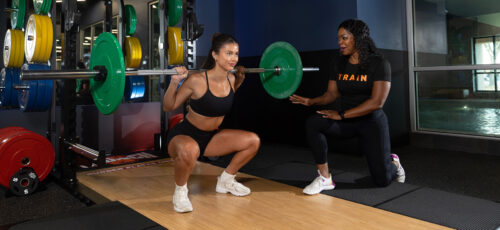
Building stronger neck muscles doesn’t have to be complicated or boring. At Crunch Fitness, we aim to help members improve strength, posture, and movement with workouts that are effective, supportive, and most importantly, fun.
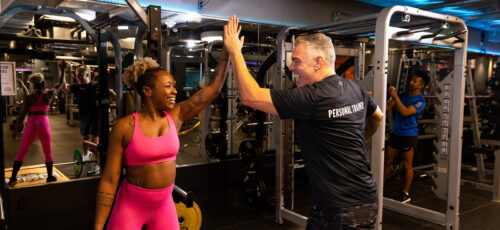
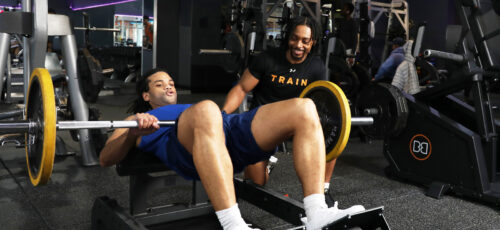
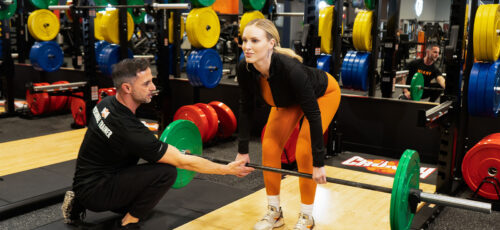
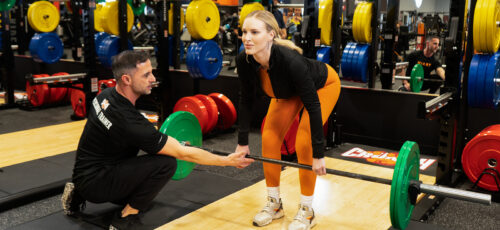
Starting neck strength exercises can feel new for beginners. That’s where Crunch trainers come in. They can assess your posture, neck mobility, and muscle strength before recommending exercises.
Based on your goals, trainers can create a plan that safely strengthens your neck and spine, while also supporting your shoulders, back, and core.
This balanced approach helps reduce neck pain, improve posture, and support long-term progress in strength training.
Discover our article: Do Personal Trainers Create Customized Workout Plans?
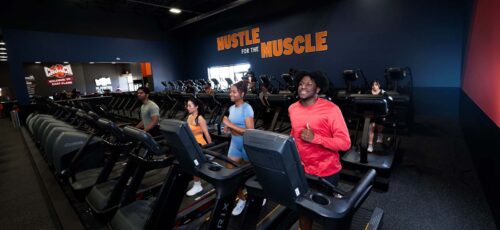
Crunch gyms have a wide range of equipment for safe and effective training. With resistance bands, cable machines, and functional training areas, you can do controlled movements to build neck strength along with full-body exercises.
These spaces also make it easy to combine neck and core exercises, which helps improve your stability and athletic performance.
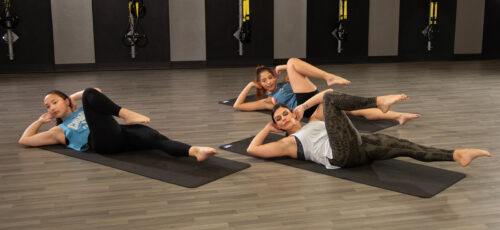
One of the best things about Crunch is the motivating atmosphere. Group fitness classes bring energy, coaching, and a sense of community, helping you stay consistent with your workouts. Many classes include core training, posture exercises, and functional movements that also support neck strength.
When workouts are fun and social, it’s easier to stay committed and keep building a stronger, healthier body.
Read more: Our 12 Best Group Fitness Classes: The Secret to Supercharging Your Workouts
Crunch promotes a culture of positivity, inclusivity, and fun with no judgments by providing an environment for all individuals, regardless of their health and fitness goals. Find a Crunch gym near you to try our free trial membership, or join Crunch now. We’re here for you – at the gym or at home. Access the best live & on-demand workouts anytime, anywhere with Crunch+. Ready to get sweaty? Try hundreds of workouts for free! Start your free trial now!
Yes, gentle neck strength exercises are usually safe for mild neck pain if you do them slowly and with good control. Simple moves like isometric or self-resisted neck exercises can help strengthen the muscles that support the cervical spine. If your pain keeps going or gets worse, a physical therapist might suggest other treatments, such as manual therapy or a specific exercise plan.
Most beginners can do neck strengthening exercises two or three times a week as part of their regular workout. This gives your muscles time to get stronger and recover. Adding core exercises like a modified plank or bridge can also help with stability and posture.
No, many safe neck strength exercises can be done using only bodyweight. Exercises like Wall Lean Neck Strengthening or Neck Extension Prone use the weight of your head to activate the neck muscles. As you progress, you can add resistance bands for exercises like Neck Retraction with Band to increase strength gradually.
You are probably doing the exercise right if the movement feels steady and your neck doesn’t feel sharp pain or excessive strain. Keep a neutral spine, move slowly, and maintain steady breathing while engaging your core and shoulder muscles for support. If your shoulders rise up or your neck feels tight, use less resistance and pay attention to your form.
Safe neck strength exercises target the deep neck flexors, neck extensors, and neck rotator muscles that stabilize the head and support the cervical spine. These muscles also work together with the shoulders, upper back, and core to improve posture and movement. Stronger neck muscles help support everyday activities, workouts, and overall stability.